
Three Quotes Aren’t a Benefits Strategy
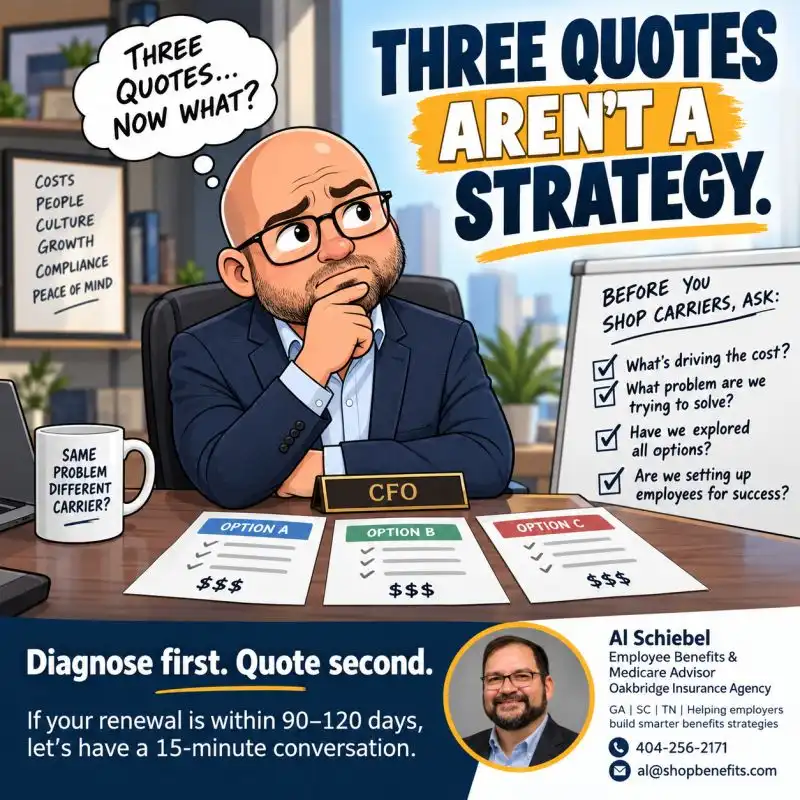
Every year, countless employers receive their health insurance renewal and immediately focus on one question:
“Can we get some better quotes?”
That response is understandable. When a renewal comes in with a double-digit increase, shopping the market feels like the logical next step. However, before gathering carrier proposals, business leaders should pause and ask a more important question:
What problem are we actually trying to solve?
Too often, companies jump directly into the quoting process without fully understanding what’s driving the increase. As a result, they may spend significant time evaluating new carriers only to end up facing many of the same challenges under a different logo.
Diagnose the Problem Before Prescribing the Solution
A higher renewal is usually a symptom, not the root issue itself. Before making a carrier change, employers should take time to identify what’s creating the pressure within the plan.
- Claims Activity: Have large claims or ongoing medical conditions significantly impacted costs?
- Specialty Prescriptions: Are high-cost medications driving a disproportionate share of spending?
- Plan Utilization: Are employees using services differently than expected?
- Plan Design: Could deductibles, copays, or network structures be contributing to rising expenses?
- Carrier Pricing: Is the increase primarily related to the carrier’s underwriting approach?
- Employee Satisfaction: Are employees frustrated with access, service, or coverage options?
Each of these challenges requires a different solution. A carrier change may ultimately be the right move, but only after the underlying causes are clearly understood.
Changing Carriers Doesn’t Always Change the Outcome
Think of health benefits management like any other business decision. If costs rise unexpectedly, most organizations would first analyze the data, identify the drivers, and then develop a strategy. Benefits should be no different.
When employers skip the diagnostic phase and move straight to quotes, they risk simply relocating the problem instead of solving it. A lower first-year premium may look attractive, but if the underlying issues remain untouched, future renewals often bring the same frustrations right back to the table.
Start the Conversation Early
The best time to evaluate your benefits strategy is long before renewal season arrives. Employers whose renewals are approaching within the next 90 to 120 days have an opportunity to ask better questions, analyze their plan’s performance, and make more informed decisions.
By taking a strategic approach early, organizations gain more flexibility, more options, and a clearer understanding of what will have the biggest impact on both costs and employee experience.
Diagnose first. Quote second.
Let’s Look Beyond the Spreadsheet
If you’re ready to take a deeper look at what’s driving your benefits costs and explore strategies that go beyond simply collecting quotes, I’d be happy to help.
A quick 15-minute conversation may uncover opportunities that could make a meaningful difference before your next renewal.
Connect with Al Schiebel today:
- Email: al@shopbenefits.com
- Phone: 404-256-2171
ShopBenefits is an Oakbridge Insurance Agency partner.