
The $55,000 Prescription Hiding Inside Your Health Plan
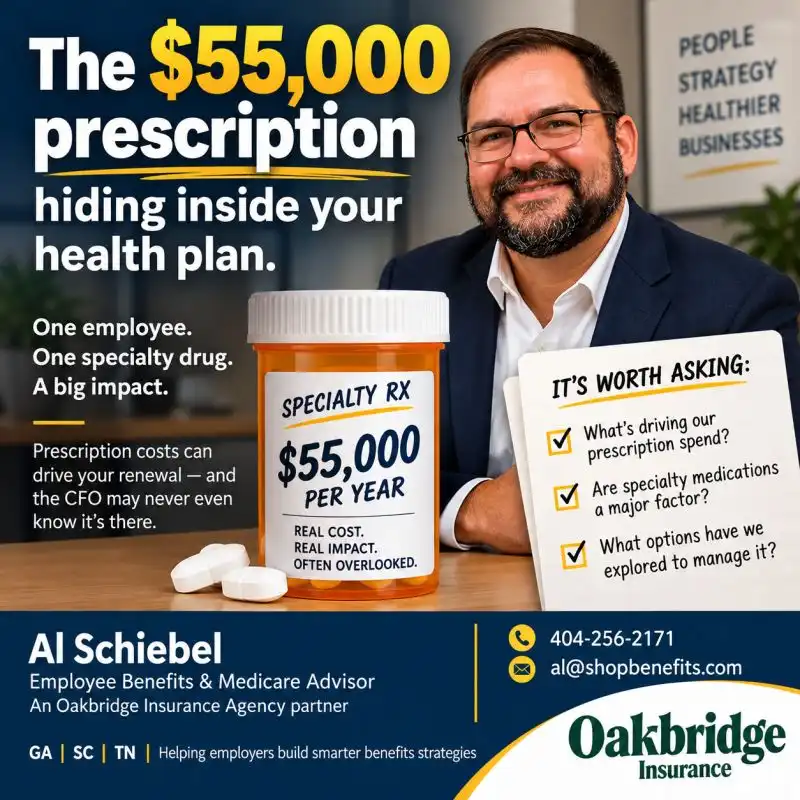
When employers review their health plan costs, they often focus on the overall renewal increase without fully understanding what’s driving it.
Sometimes the cause is widespread utilization across the workforce. Sometimes it’s a plan design issue. And sometimes a significant portion of the increase can be traced back to a single, high-cost prescription medication.
For a 50-person employer, one specialty medication costing $55,000 per year can have a meaningful impact on overall plan performance.
The challenge is that many business owners and CFOs never see that level of detail. They receive the renewal, review the percentage increase, and begin shopping carriers without understanding what caused the increase in the first place.
Look Beyond the Renewal Number
When prescription costs rise, the solution isn’t automatically to change insurance carriers or increase employee deductibles.
The first step should always be understanding what’s driving the expense.
What’s actually driving our prescription spend?
Are specialty medications a major factor?
What options have we explored to manage those costs?
Those questions often reveal opportunities that would otherwise go unnoticed during a traditional renewal process.
Understanding the Real Cost Drivers
Specialty medications are becoming an increasingly important factor in employer health plans. These medications often treat complex or chronic medical conditions and can carry annual costs that far exceed traditional prescription drugs.
Employers do not need access to personal medical information, nor should they have it. The goal is not to identify who is taking a medication.
The goal is to understand how plan dollars are being spent and what factors are influencing future costs.
- Analyze prescription trends: Identify major categories driving pharmacy spend.
- Evaluate specialty medication impact: Understand how high-cost drugs affect overall plan performance.
- Review available management strategies: Explore programs and solutions designed to help manage specialty drug costs.
- Create a long-term strategy: Address underlying cost drivers instead of reacting to annual renewals.
The Renewal Increase Is the Result
Many employers focus entirely on the renewal increase itself. But the increase is often the outcome of decisions, utilization patterns, claims activity, and prescription costs that occurred throughout the previous year.
By the time the renewal arrives, the real question is no longer “How much did it go up?” but rather:
Why did it go up?
Without understanding the “why,” it’s difficult to build a strategy that creates better results in future years.
In some cases, the $55,000 prescription hiding inside the plan may be a significant piece of the puzzle.
Start Asking Better Questions
If your renewal is approaching and you’re not receiving a clear explanation of what’s driving your costs, now is the time to begin asking deeper questions.
The earlier you understand the factors affecting your plan, the more options you’ll have available to make informed decisions before renewal season arrives.
Connect with Al Schiebel today:
- Email: al@shopbenefits.com
- Phone: 404-256-2171
ShopBenefits is an Oakbridge Insurance Agency partner.