
A Renewal Increase Isn’t the Diagnosis: Why You Must Uncover the Cause First
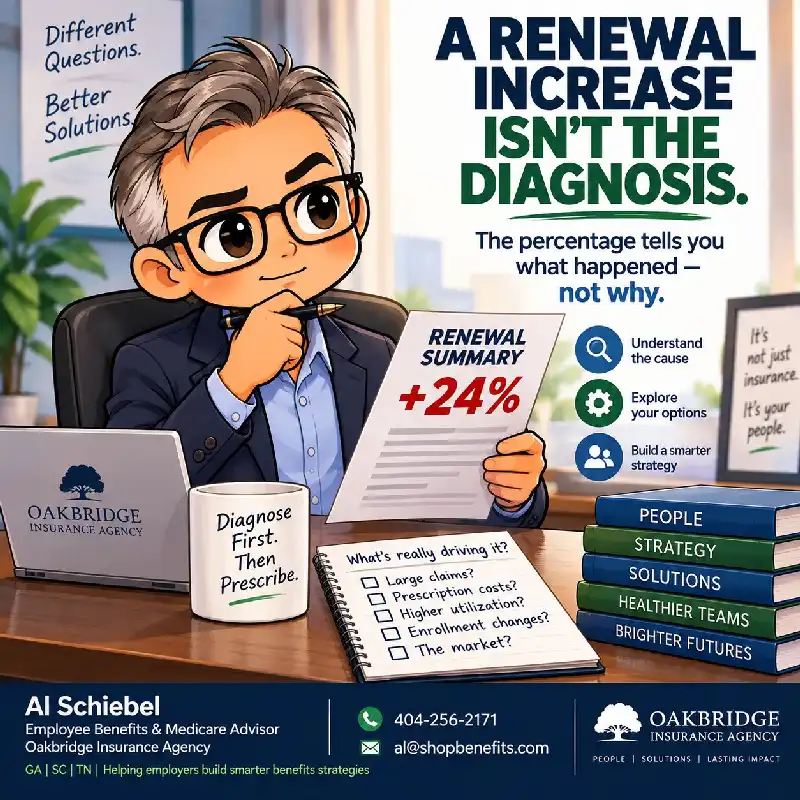
Receiving a health insurance renewal with a 24% increase is a jarring moment for any business leader. The automatic reaction for most companies is to immediately shop the market for competing quotes, but a 24% rate hike is simply an outcome—it is not the diagnosis. The percentage tells you what happened to your premium, but it does not tell you why. Changing insurance carriers without investigating the underlying drivers rarely solves the long-term problem; it simply moves an unchecked issue to a new spreadsheet.
Before rushing into a carrier search, leadership must pause to evaluate the true financial and operational factors behind the numbers.
Uncovering the Root Cause of Your Rate Hike
Before you begin shopping for new quotes, ask key structural questions to identify the real cost drivers:
- Was it driven by large claims? High-cost catastrophic medical events impact plan performance differently than broad-based utilization shifts.
- Are prescription costs surging? Specialty drugs and shifting pharmacy utilization can rapidly elevate overall health plan spending.
- Is overall utilization increasing? A general increase in office visits, outpatient procedures, or ER visits across the entire workforce requires a unique management approach.
- Have there been enrollment changes? Shifts in workforce demographics, family tier ratios, or overall employee participation directly impact risk pool economics.
- Is it simply market trends? Carrier-wide rate adjustments, regional medical inflation, and statutory changes can impact renewals regardless of group performance.
Three Critical Questions Leadership Must Ask
Before committing to any benefits decision for the coming year, step back and evaluate your options through a strategic lens:
- What drove the increase?
- Is it likely to continue into future plan years?
- What alternative funding models or plan designs have we actually considered?
“Diagnose the problem before prescribing the solution. Sometimes the answer is changing carriers, sometimes it’s changing the strategy, and sometimes staying put is the right decision.”
Let’s Look Beyond the Spreadsheet
If you’re ready to stop guessing and start managing your benefits proactively, we can help you uncover the real story behind your numbers. If your renewal is coming up, let’s have a 15-minute conversation to look under the hood.
Connect with Al Schiebel today:
- Email: al@shopbenefits.com
- Phone: 404-256-2171
ShopBenefits is an Oakbridge Insurance Agency partner serving employers in GA, SC, and TN.