
How One Employee Can Change an Entire Small-Group Renewal
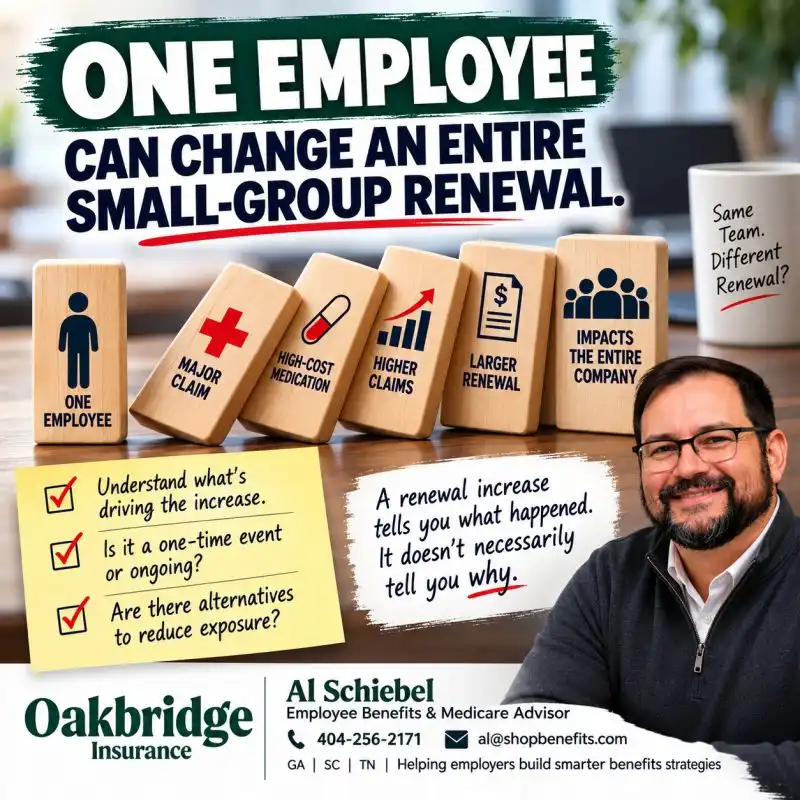
Many employers are surprised to learn just how much impact a single person can have on a small-group health insurance plan.
Consider a company with 35 employees. For years, claims remain relatively predictable and renewal increases stay within expected ranges. Then one employee experiences a major health event, requires a significant surgery, or begins taking a specialty medication that costs thousands of dollars per month.
Suddenly, the company’s renewal arrives with a 25% increase.
The immediate reaction is often:
“We need better quotes.”
Maybe that’s true. But before shopping carriers, employers should first understand what’s driving the increase.
Small Groups Can Have Concentrated Risk
In larger organizations, healthcare costs are spread across hundreds or even thousands of employees. In a smaller company, however, healthcare expenses can become highly concentrated.
Just one or two individuals may account for a significant percentage of the plan’s total claims during a given year.
That doesn’t mean anyone did anything wrong.
It doesn’t mean the insurance carrier is being unreasonable.
And it certainly doesn’t mean the employee is the problem.
It simply means the numbers deserve closer examination before major decisions are made.
Understanding the “Why” Behind the Renewal
A renewal increase tells you what happened. It does not automatically explain why it happened.
Before making changes to your benefits program, it’s important to identify the underlying drivers behind the increase.
How concentrated are our claims?
Is this likely to be an ongoing expense or a one-time event?
Are there reasonable alternatives that could reduce our exposure without negatively affecting employees?
The answers to those questions often provide far more value than simply gathering additional carrier proposals.
Don’t Skip the Diagnostic Phase
Too many employers move directly from receiving their renewal to requesting quotes from competing carriers. While market shopping can be an important part of the process, it should come after understanding what’s driving costs.
Without that analysis, employers risk replacing one plan with another while failing to address the real issue affecting the plan’s performance.
- Review claims concentration: Understand whether a small number of claims are driving overall costs.
- Identify major cost drivers: Evaluate high-cost treatments, procedures, and specialty medications.
- Assess future risk: Determine whether the expense is ongoing or tied to a temporary event.
- Explore strategic alternatives: Consider solutions that help manage exposure while maintaining valuable employee benefits.
Start Asking Questions Before Renewal Season
If your renewal is within the next 90 to 120 days, now is the time to begin asking questions, reviewing data, and understanding what’s happening inside your plan.
The earlier you start the conversation, the more options you’ll have available and the better positioned you’ll be to make informed decisions.
Because in many cases, three quotes won’t solve a problem that hasn’t been diagnosed.
Connect with Al Schiebel today:
- Email: al@shopbenefits.com
- Phone: 404-256-2171
ShopBenefits is an Oakbridge Insurance Agency partner.